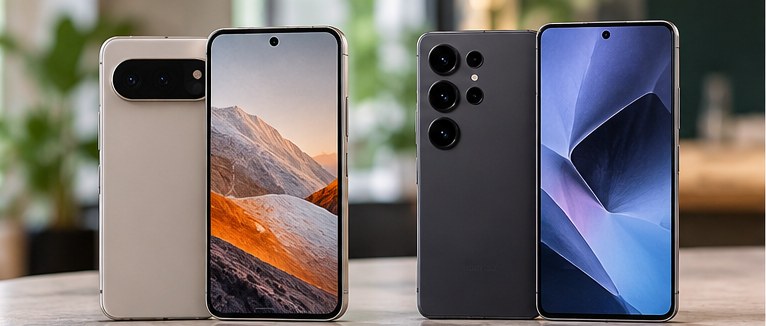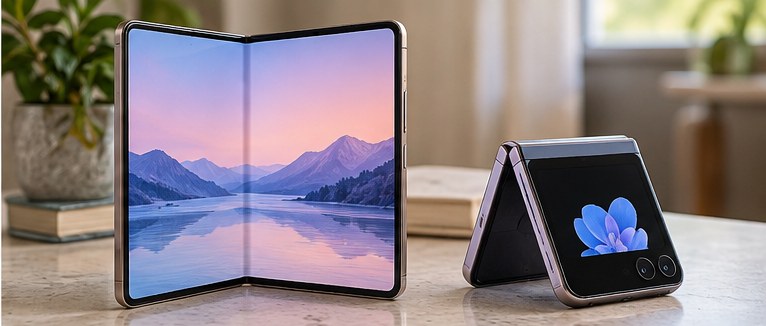
A foldable earns its premium in one of two ways: it opens into a larger workspace, or it folds a full-size phone into a smaller object. Samsung’s Galaxy Z Fold8 and Motorola’s Razr Ultra 2026 sit on opposite sides of that choice. Comparing them only by processor or camera count misses the reason to buy either.
The first test is frequency. How often would you open the extra screen or appreciate the smaller folded body? A folding demonstration lasts seconds. You will carry the phone for years.
A Fold8 needs a job for its inside screen
Samsung’s standard Fold8 has a 7.6-inch inner display, a wider 4:3 shape and tools for running several applications together. It is a different model from the Fold8 Ultra, so check which one a review or retailer is describing. [1][5]
A large document beside an email, a map beside a conversation, or a calendar beside a booking page can make the inside screen useful. The comparison is with repeatedly switching between those apps on a conventional phone. If the extra space lets you finish work on the train without taking out a laptop, the premium has a purpose.
A bigger diagonal is less persuasive for watching widescreen films. The shape of the display and the black bars around a film determine how much picture you gain. Try the content you watch, not merely the home screen stretched across the panel.
Tom’s Guide’s Fold8 coverage discusses both the appeal of three-app multitasking and uneven app adaptation. [3] A layout that works well in Samsung’s demonstration can behave differently in the banking, booking or business application you use. Open those apps before treating the phone as a pocket tablet.
A Razr needs to make carrying a phone easier
The Razr Ultra 2026 is a flip phone. Its cover screen lets you handle some short interactions without opening the large display. [2] That is convenient when you want to check a message, change a track or frame a quick picture, although app permissions and available controls still matter.
The folded shape may fit a pocket that dislikes a tall conventional phone. It also becomes thicker. Try it in the kind of pocket or bag you use, including a protective case. The dimensions in a specification sheet will not tell you whether the hinge catches against the opening.
The outside screen is most useful when it saves repeated opening. If you unfold the phone for almost everything, you still gain a smaller object to carry, but the second screen is contributing less. Decide whether portability alone is worth the price.
Repairs belong in the purchase price
A foldable has a flexible screen and a moving hinge. Samsung lists IP48 protection for the Fold8. [5] That rating is not the dust-tight IP68 protection found on many conventional phones. Water resistance also does not mean the screen can tolerate sand, pressure or a sharp object.
Before ordering, get the screen-repair price for the exact model and ask what the warranty covers. A manufacturer defect and accidental damage are different claims. If you choose a protection plan, add the premium and deductible to the comparison.
Check the inner-screen protector instructions. Peeling a layer away because it looks like ordinary shipping film can be a costly mistake. Follow the manufacturer’s service guidance if it lifts or bubbles.
People working around grit, machinery or construction dust have a stronger reason to choose a conventional phone. A case can help with drops; it does not make the flexible display rigid.
Cameras and battery still matter
Samsung lists 50-megapixel main and ultra-wide cameras on the standard Fold8, without the long-telephoto arrangement you may associate with its Ultra phones. [5] If distant sports or stage performances dominate your camera roll, compare the lens options before paying a premium for the folding screen.
Motorola’s current product listing and Tom’s Guide’s Razr Ultra 2026 review are the references to use for the 2026 model. [2][4] A similarly named 2025 Razr is a separate purchase. Retail search results can mix both years, especially when the older device is discounted.
Battery comparisons should likewise use the exact generation. An extra-large screen can encourage more screen time, and a cover display may change how often you open the phone. Capacity alone does not establish the runtime you will get.
Consider a conventional phone and a tablet
A foldable combines two jobs in one device. A separate tablet can provide a larger screen for less intensive travel or home use, while the phone stays simpler and easier to repair. Price that combination if most of your large-screen work happens at home.
The foldable has a stronger case when you need both functions away from a desk and dislike carrying two devices. A tablet left at home cannot help with a document on the train. Conversely, a tablet used mainly on a sofa does not need to live inside your phone.
Which format is worth buying?
Choose the Fold8 when the inner screen will replace frequent app switching or some of your tablet use. Choose the Razr Ultra when the folded size solves a carrying problem and its cover-screen controls fit your routine.
Spend time typing, using the outside screen with one hand and opening the applications you depend on. Then compare the complete cost with a conventional flagship, including protection and likely accessories. If you cannot name the recurring convenience you would gain, keep the simpler phone.
Sources
Sources checked October 5, 2026. Buying recommendations are Znews editorial judgments.
[1] Samsung, Galaxy Z Fold8 introduction.
[2] Motorola, Razr Ultra specifications.
[3] Tom's Guide, Galaxy Z Fold8 app-scaling analysis.
[4] Tom's Guide, Motorola Razr Ultra 2026 review.
[5] Samsung, Galaxy Z Fold8 specifications comparison.